Mucking out takes up a significant share of the daily work in riding stables. That labor is costly, and the time could be used more efficiently. It is not only rubber mats that can simplify the manure removal process by providing savings on bedding. Nowadays, an increasing range of mobile aids – including semi-automated manure removal solutions – are available, which can be used depending on the layout of the stable. This makes work processes more efficient and reduces the physical strain on staff.

Start with mobile mechanization or go straight to a stationary one?

For many stables, a phased approach makes sense:

  1. Start with mobile mechanization to reduce the workload quickly and flexibly.
  2. Implement stationary automation where manure transport, distances, or the number of looseboxes are consistently the biggest cost drivers.

Mechanized equipment (without a stationary system)

Depending on the type of stable, even smaller solutions can make a big difference, such as electric wheelbarrows or larger transport equipment. For open stables and paddock areas, sweeping and collection equipment can also play a role. A paved ground is often key to making effective use of these machines.

In practice, a load-bearing, level, and slip-resistant surface often determines whether sweeping and collection equipment actually saves time. Rubber mats can stabilize high-traffic areas and walkways, make cleaning easier, and improve vehicle access.

Stationary manure removal systems

These systems aim to greatly simplify or partially replace the process of “collect manure → transport it → unload it.” They often become particularly attractive as the number of looseboxes increases.

Vacuum manure removal system
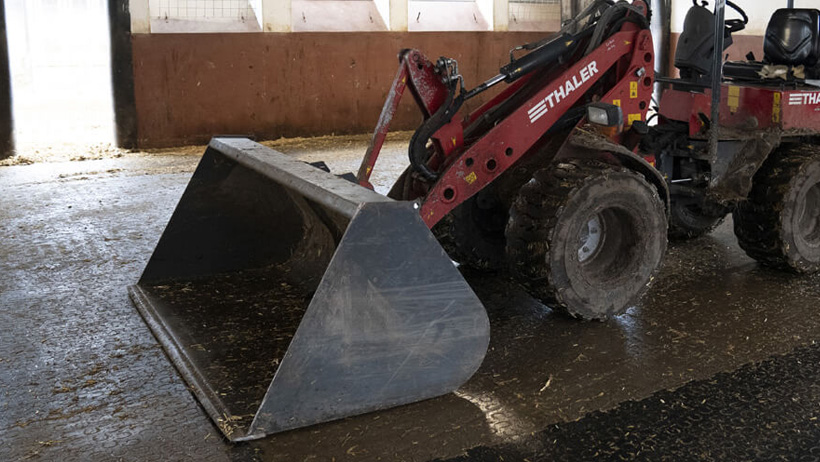
A handy mobile helper: a farm yard loader with dozer blade

Mobile helpers in open stables, paddocks and on walkways

As standard, a farm yard loader already provides significant assistance with manure removal in open stables, as well as in loosebox systems, as it eliminates the need to make trips with a wheelbarrow. However, the process of sweeping up and collecting the manure still remains.

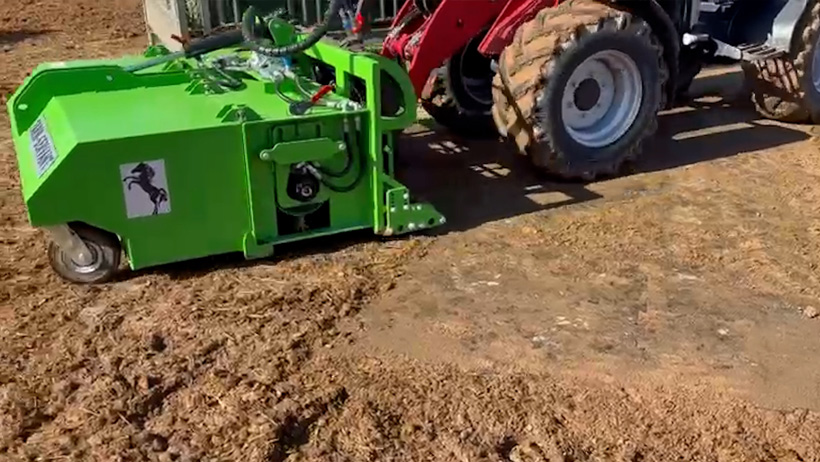
The following mobile helpers can be of great assistance here:

Vacuum systems: collecting manure in a container

Vacuum technology can make collection easier, as manure is picked up and collected directly. In practice, it is worth checking the following points in advance:

  • Ground conditions: The muddier and stickier the ground, the more difficult the equipment may be to use, depending on the system. Where mud or sticky ground slows the work down, a stabilized surface or a mat solution such as BELMONDO® Flix can help make vacuuming and maneuvering easier and cleaner.
  • Gates and turning areas: Actual working time is heavily influenced by how easily you can get through and turn round.
  • Getting horses used to the machine: Introduce horses to the noise and movement gradually.

If possible, a trial run is worthwhile—especially where ground conditions are challenging.

Horse stable "Friesenhof Holler" in Aurachtal, Germany: Manure removal with the mobile "Farm Servant" vacuum system in an open stable, around a hay feeder on a stabilized surface laid with BELMONDO paddock mats

Attachments for farm yard loaders/tractors/wheel loaders: making the most of existing equipment

Many operations already own a tractor. In that case, attachments can be an efficient way of mechanising manure removal. Typical examples include:

  • Rubber lip/clearing blade for pushing manure together (particularly on paved surfaces)
  • Shovel for larger quantities
  • Grapple/crocodile jaw, e.g. in the lying area
  • Attachable sweeper, some with a collection tray

Practical tips:

  • Check in advance whether surfaces can withstand the vehicle’s weight and point loads over the long term (otherwise ruts and new muddy patches will form).
  • Clear access routes and sufficient space save manoeuvring time.
  • On surfaces with a loose top layer (e.g. sand): select settings and procedures so that as little material as possible is carried away.
Watch the farm yard loader in action: See how quickly the lying area is mucked out.

BELMONDO rubber mats are compatible with vehicle traffic and can be easily mucked out using machinery (please follow the vehicle traffic specifications!)

Electric wheelbarrows and transport aids: a small first step, often with a big impact

If physical strain and moving manure over short distances are the main challenges, electric transport aids can be a straightforward solution – without renovations or complex equipment.

The floor is key to ensuring that mobile technology really works

Regardless of the mobile system used, efficiency is achieved above all when surfaces are load-bearing, as level as possible and easy to clean. This is precisely where ground stabilization and mat solutions can help – particularly in high-traffic areas (feed troughs, drinking troughs, gates) and along main pathways.

Rubber mats can provide a robust base to:

  • Reduce mud formation,
  • Make surfaces easier to clean,
  • Facilitate compatibility with vehicle traffic in practice (depending on the surface and its construction).

Manure removal with the farm yard loader: A practical example

At the Trakehner stud farm Treiber, a lying area measuring ca. 300 m² and fitted with BELMONDO Trend mats has been mucked out daily using the farm yard loader since 2013 – quickly and without any significant wear.

Stationary systems in stables with looseboxes: Three common types

Stationary systems are particularly worth considering when there are many looseboxes to muck out, the routes to the manure storage area are long, or workflows need to be more standardized.

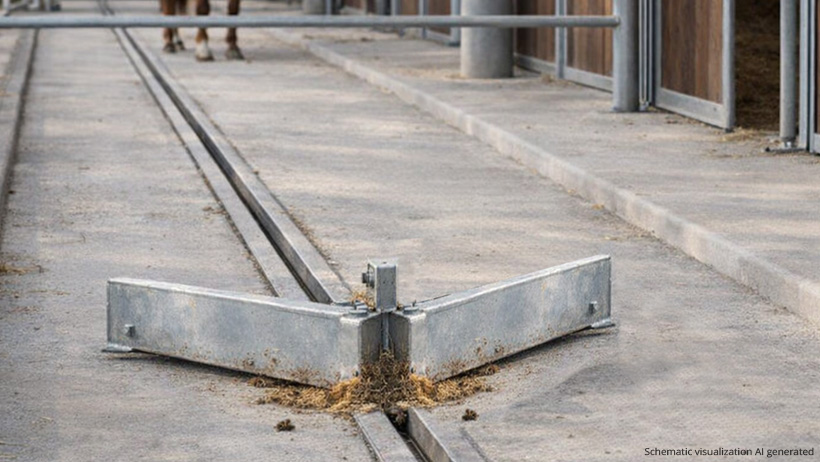
Scraper manure removal (above-ground, often easy to retrofit)

How it works: Manure is moved out of the loosebox, for example through the door, onto a scraper path. A scraper, sometimes a folding scraper, transports it to the end of the stable, where it is collected or picked up.

Practical example looseboxes with paddock: When mucking out, the manure is discharged directly outside; a wide scraper then pushes the collected manure to the end of the stable. This can reduce the walkways used and – depending on the stable – result in significant time savings.

What should you consider?

  • Horses may need time to get used to moving scrapers.
  • In wet or freezing conditions, scraper surfaces can become slippery. Rubber mats can help here as a flooring solution. The BELMONDO Paddock mat is particularly well-suited for this purpose. Slip-resistant flooring not only improves safety but also helps the scraper move manure smoothly and consistently.
  • Ideally, the manure collection area should be at a lower level, eliminating the need for equipment to lift the manure.

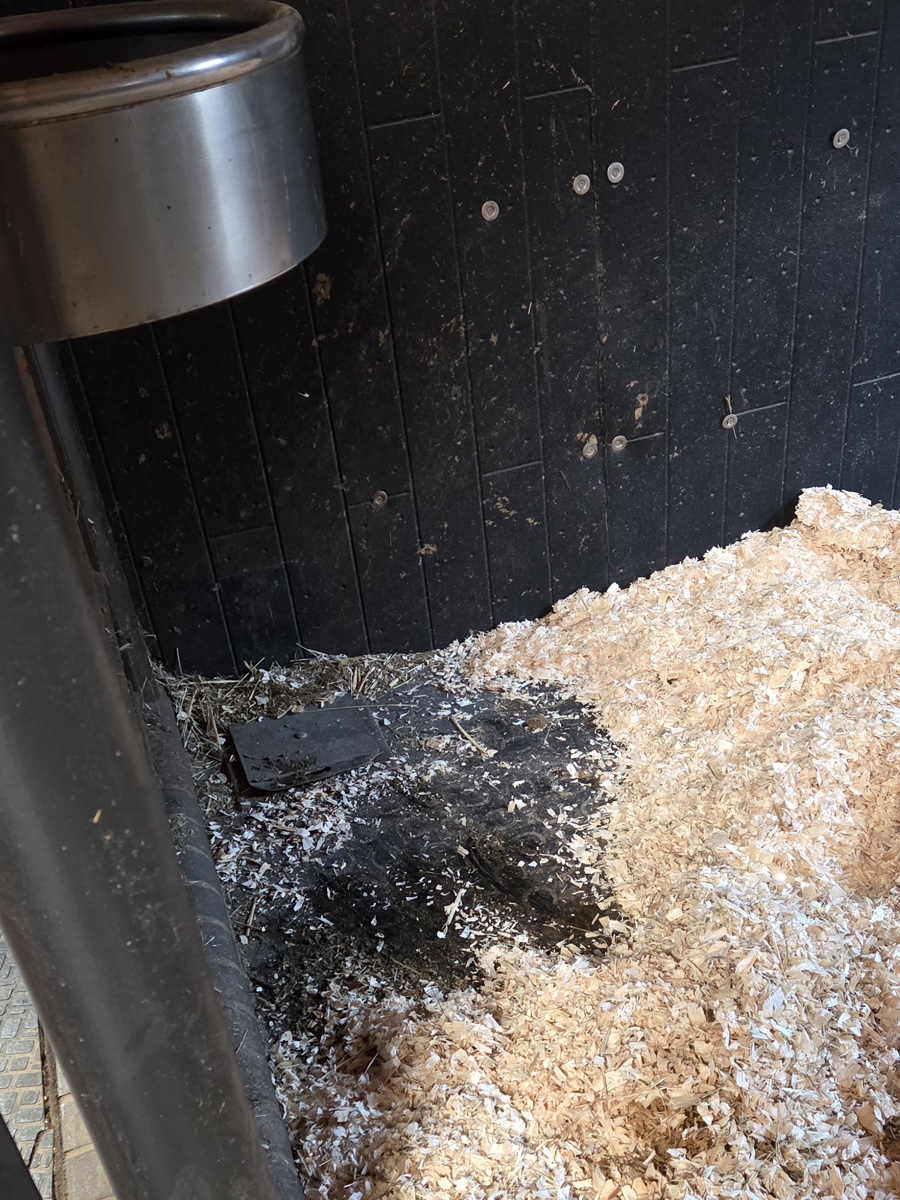
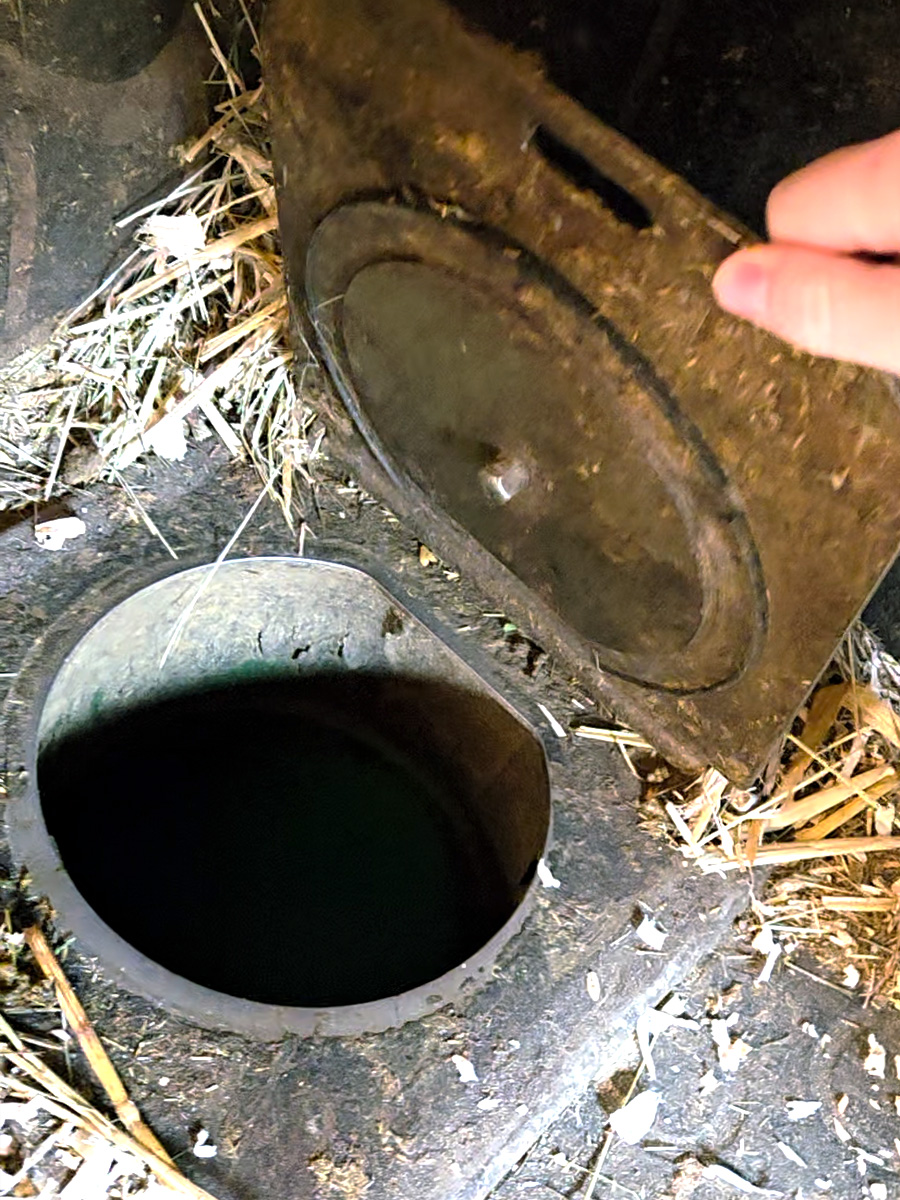
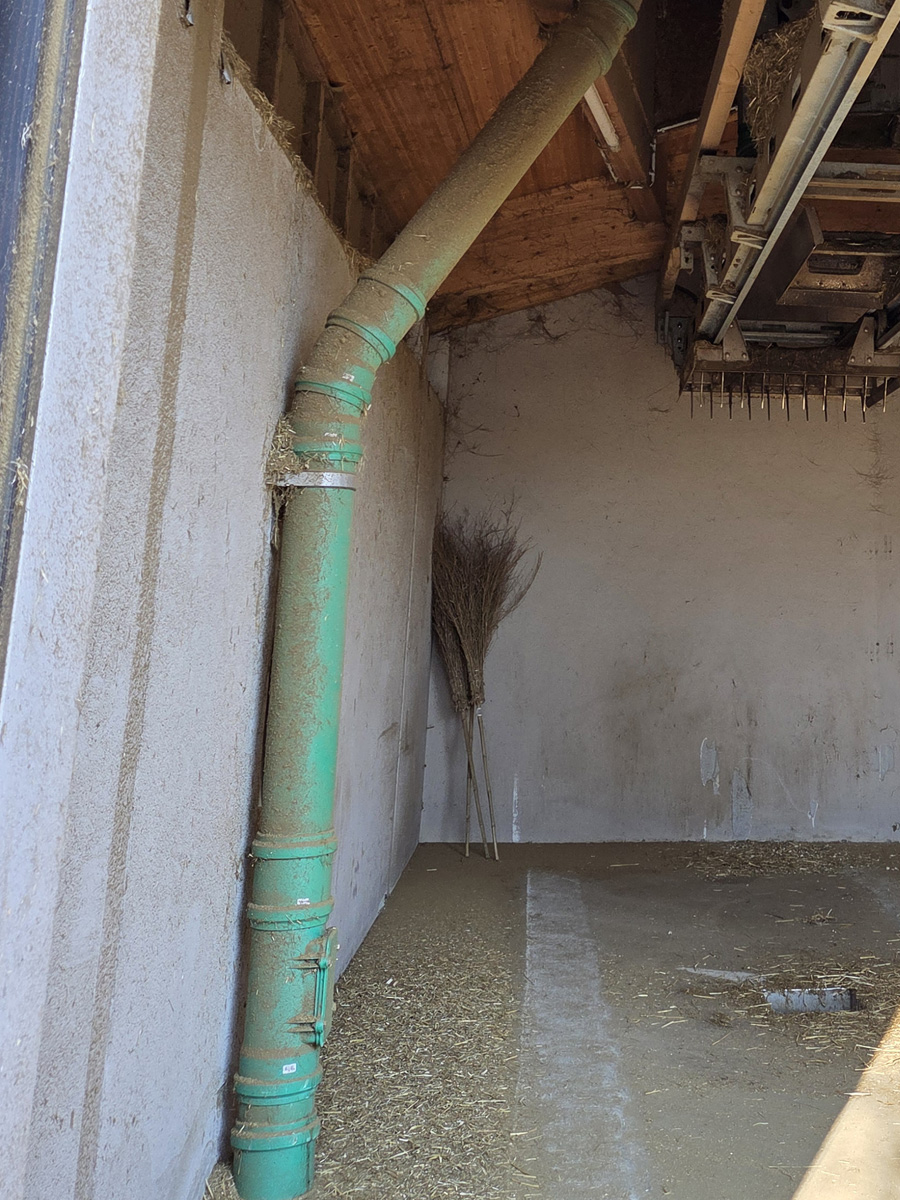
Vacuum manure removal (pipe system, flexible, usually easy to retrofit)

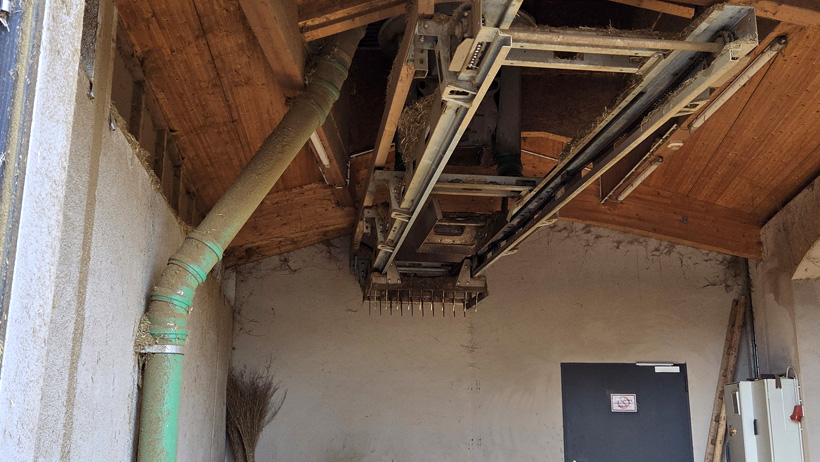
How it works: Manure and bedding are collected through a suction inlet and transported through a pipe system to the manure storage area or container. The pipes can be installed overhead or below the floor.

Typical advantages:

  • can often be retrofitted (e.g. pipework routed over the looseboxes)
  • few mechanical parts in the floor → less wear
  • Compatible with different types of bedding, depending on the installation

What should you consider?

  • Depending on the model or version, noise and dust may be an issue.

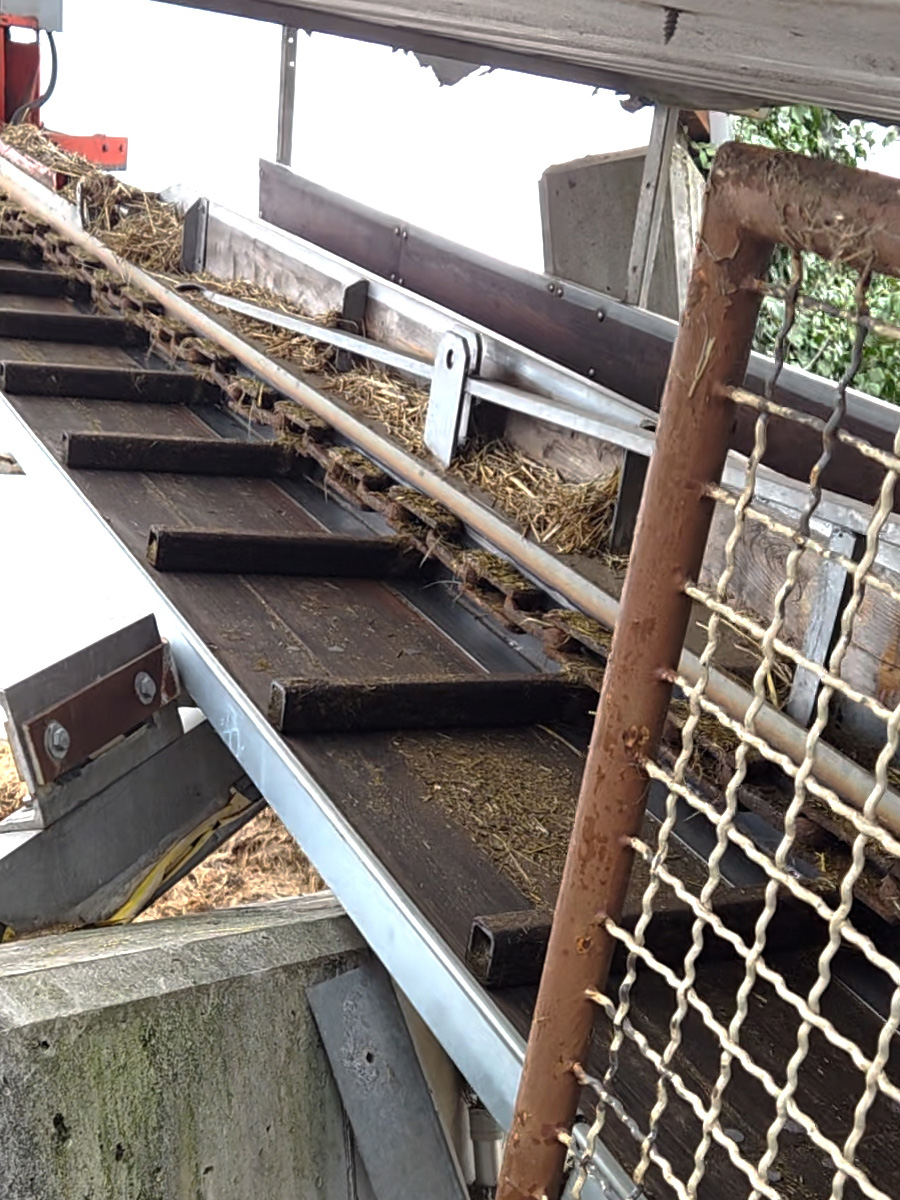
Channel, chain or push-rod manure removal systems (subsurface, ideal for new construction)

How it works: A channel beneath the horse looseboxes is filled through openings. A continuous-loop chain with paddles or push rods moves the manure to the manure storage area or container, either horizontally or with a lifting system.

Typical advantages:

  • A tidy appearance, with the system installed below the floor
  • Easy to scale, for example with cross-conveyors and feeder conveyors in larger systems

What should you consider?

  • Usually best suited to new construction or renovations, as the channel must be incorporated into the building design
  • Plan for maintenance, inspections and frost management
Chain-driven manure removal system at the Tennenlohe riding stable
Push-rod manure removal at the Mitterlehner horse stable

Automated bedding: the second step after manure removal

To optimize stable workflows, it makes sense to consider not only manure removal but also how bedding is added. Automated bedding systems, for example, can transport bedding through pipes to outlets in the looseboxes and distribute it evenly. This reduces working time and physical strain while providing a consistent layer of bedding. Depending on the system configuration, bedding can also be transported over longer distances.

Horses should not be in the looseboxes while bedding is being added, as dust levels are particularly high during this process.

At what point does the investment pay off?

There is no single “magic number” of looseboxes at which investing in mechanized manure removal pays off. However, these practical benchmarks can help:

  • Some stables use automatic manure removal even with as few as ca. 8 horses.
  • Investment range: €500–2,000 per horse (depending on equipment and building conditions.)
  • Example: Saving 6 minutes per horse per day amounts to approximately 1,460 hours per year for 40 horses
  • Service life: with proper care, systems can be very durable.

Sample calculation (simplified)

Saving 6 minutes per horse per day with 40 horses adds up to 1,460 hours per year. At €15 per hour, that represents €21,900 in annual labor savings, before financing and maintenance costs are deducted. In addition, rubber mats in looseboxes or lying areas can reduce the amount of bedding needed. This often reduces the volume of manure that has to be moved—and the associated transport and disposal costs.

Planning: Key questions before making a decision

Stable type and use

  • Is it an indoor stable with looseboxes, a stable with paddock looseboxes, or a partially or fully open stable?
  • How many looseboxes are there? What are the working hours and staffing arrangements?

Manure handling – often the deciding factor

  • Where is the manure storage area or container, and at what level?
  • Are the routes short, and is there suitable vehicle access?

Bedding and manure consistency

  • Straw, shavings, pellets, or a mix?
  • How does the bedding affect transport, storage, and equipment?

Horse safety and acclimation

  • Can the horses remain in the area during manure removal?
  • Are there slippery areas, particularly in wet or freezing conditions, that need to be addressed?

Tip: Start with a structured approach

  • Measure current working times: Record the time spent mucking out, routes, unloading, and, if applicable, adding bedding.
  • Identify the bottleneck: Is it cleaning the surfaces, transporting or unloading manure, or staff time?
  • Plan in stages: Start with mobile equipment, then consider a stationary system if the numbers support it.
  • Make quotes comparable: Use the same assumptions and operating conditions for each.
  • Clarify service arrangements: Ask about maintenance, wear parts, and response times.

Floor, vehicle traffic, rubber mats: ensuring that equipment runs reliably

Equipment delivers its full benefits only when surfaces can bear the load, are sure-footed, and easy to clean. In open stables and high-traffic areas, such as around hay feeders and water troughs, ground stabilization and mat solutions help prevent muddy areas and allow machines to operate safely.

Rubber mats and mechanical manure removal complement each other particularly well in areas where floors are subjected to heavy loads: improved slip resistance, easier cleaning/removal and, often, less bedding = less manure volume.

A good ground is also important from an animal welfare perspective: horses avoid deep mud. Areas that are permanently muddy and mixed with excrement can lead to health problems.

BELMONDO rubber mats provide a durable foundation for everyday use in both indoor and outdoor areas. They are suitable for vehicle traffic, and their surfaces are easy to maintain and clean—an advantage wherever work needs to be carried out efficiently and hygienically. They also provide secure footing, even in wet or freezing conditions.

An additional benefit regarding bedding and manure volume: when loosebox floors are fitted with mats, the bedding layer can often be kept thinner in practice – this saves on bedding, reduces the amount of manure to be moved and makes manure storage easier.

Practical check: Mechanical manure removal on BELMONDO® stable mats
For reliable mechanized manure removal, drive slowly and steadily, use suitable tires, and ensure the underlying surface is appropriate. It is important that no visible “bow wave” forms. 

The exact conditions can be found here: BELMONDO vehicle traffic specifications

FAQ: Frequently asked questions about mechanized manure removal

Can I retrofit a manure removal system?

Often, yes. Scraper and vacuum systems are generally relatively easy to retrofit. subsurface channel systems are usually more suitable for new construction or major renovations.

Does the ground need to be suitable for machinery?

For many solutions, especially in open stables, a stabilized, load-bearing surface is important so machinery can drive and clean reliably. When choosing flooring, make sure it is compatible with vehicle traffic and easy to clean.

What does it cost?

  • Stationary systems: Roughly €500–€2,000 per horse
  • Mobile equipment: Costs vary depending on the type of equipment

What about freezing temperatures in winter?

Depending on the system, precautions against freezing may be needed—for example, clearing out channels and preventing or addressing slippery conditions. Rubber flooring can be a useful addition.

Conclusion

Mechanized manure removal is not a luxury. When planned well, it can make a real difference: less physical strain, more predictable working hours, and better cost-effectiveness over the long term. Especially when building a new stable or modernizing an existing one, it pays to plan the manure removal system and flooring together.

Links to the featured horse facilities:

Mitterlehner horse stable: https://www.pferdehof-mitterlehner.de

Tennenlohe riding stable: http://reiterhof-tennenlohe.de

Horse stable Holler Dörflas: https://www.instagram.com/friesenhof_holler


Sources:

BMEL (ed.) (2009): Leitlinien zur Beurteilung von Pferdehaltungen unter Tierschutzgesichtspunkten. PDF (accessed: 6 February 2026)

Pferdebetrieb, Bau Spezial (2018): „Mist, Mist, Mist …“ 

Pferdebetrieb, Online (2024): „Abäppeln mit Technik: Offenstall misten“

Schauer Agrotronic GmbH (2022): Pferdestall – Systeme Active Horse Systems (brochure)

Peter Prinzing GmbH (2012): Entmistungstechnik für Ihren Stall – Pferdestalle (brochure)


Manufacturer/market examples (web links):

Villiger Technik: https://www.villigertechnik.ch/de/suction

Active Horse: https://www.active-horse.com/produkte-kompetenzen/entmistung/

Sulzberger: https://www.sulzberger.de/pferdestaelle/modulstaelle-2-reihig-staelle/anregungen-zum-pferdestallbau

Stay up to date with our guidance newsletter!

Subscribe to get regular practical tips and advice as well as the latest news from KRAIBURG BELMONDO®.